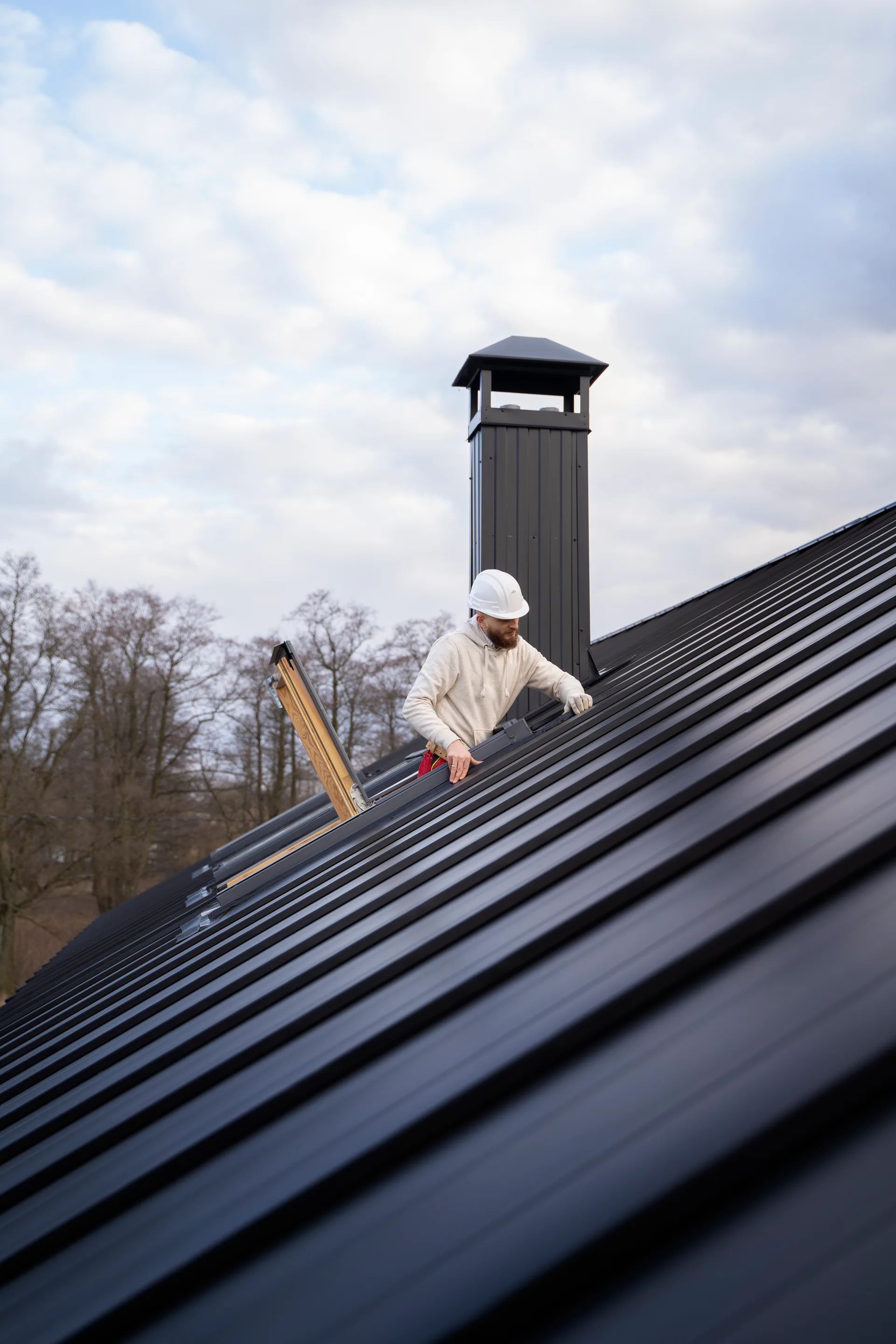
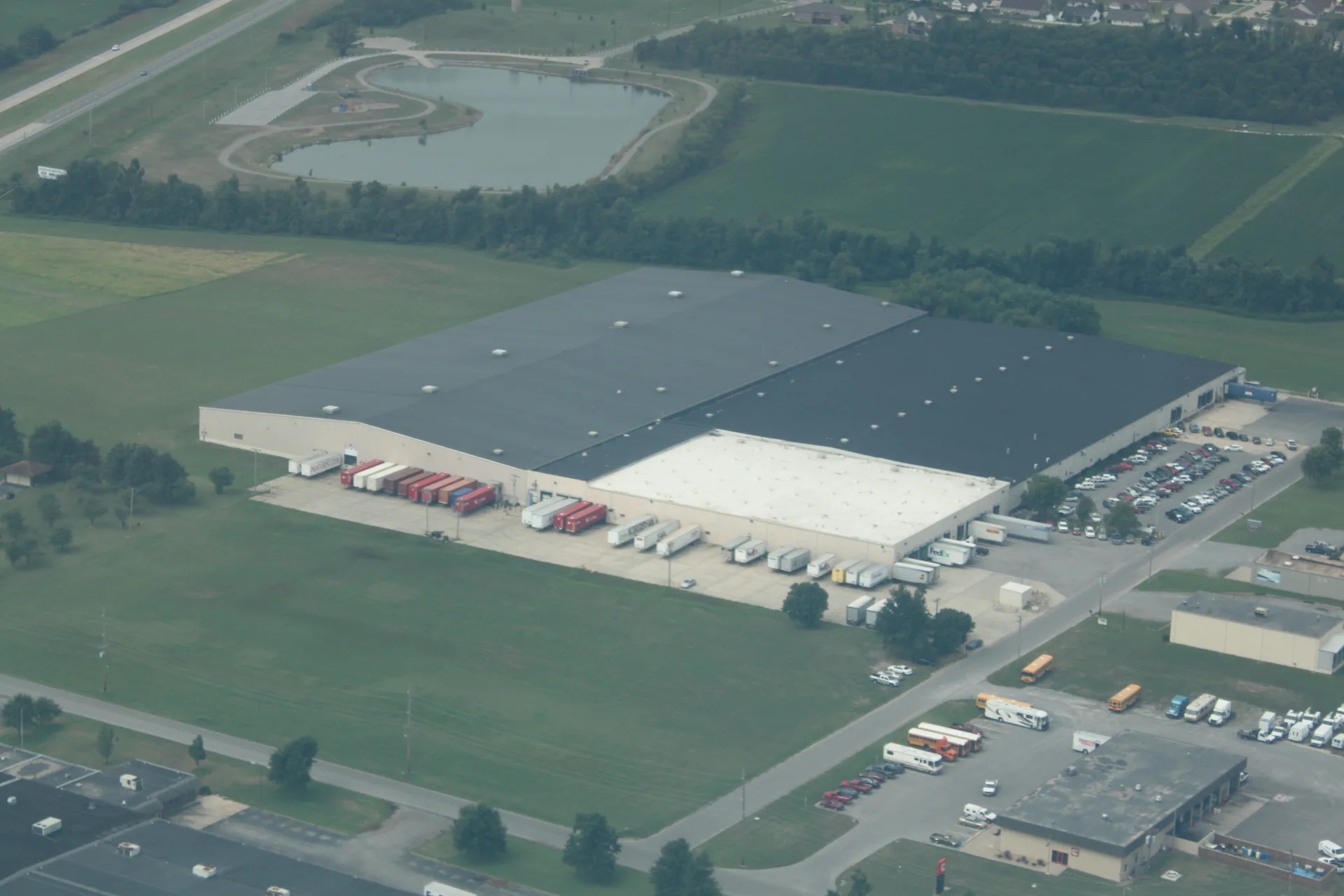
Flat roofs carry most of the commercial and industrial buildings across Southeast Missouri: warehouses, retail stores, offices, schools and plants. They also take a different kind of beating than a sloped roof. Water does not run off a low-slope roof on its own, so every clogged drain, open seam and loose piece of flashing becomes a place for water to sit and work its way in.
Winter makes that worse. Missouri's mix of fall rain, winter ice and freeze and thaw cycles puts real stress on a membrane, and a small problem in October can become a ceiling stain, damaged inventory or a shutdown by February. A walk across the roof before the cold sets in is one of the cheapest ways to protect a building.
Here is the checklist our crews use as a starting point when building owners ask what to look for.
1. Clear Every Drain, Scupper and Gutter
Drainage is the first thing to check, because a flat roof is only as good as its ability to move water off. Leaves, debris and dirt collect around drains and scuppers through the fall, and once they freeze in place the water has nowhere to go.
- Remove debris from roof drains, scuppers and the area around them
- Check that commercial gutters and downspouts are clear and securely attached
- Make sure downspouts carry water away from the foundation, not onto walkways where it can freeze
If water still backs up after the drains are clear, the roof may need drainage upgrades. Our flat roofing systems work includes scupper installation and crickets, small tapered structures that redirect water toward the drains.
2. Look for Ponding Water
Water pooling on the roof surface more than 48 hours after rain is one of the clearest warning signs a flat roof gives. Standing water adds weight, speeds up wear on the membrane and, once it freezes, pushes on seams and flashing from every side.
Walk the roof a day or two after a rain and note any low spots. Sagging areas often mean the roof needs a cricket or other drainage correction, and catching it in the fall is far easier than dealing with it under ice.
3. Inspect Seams and the Membrane
Whether your building has a TPO, PVC or EPDM roof, the membrane and its seams are where leaks start. Look for:
- Cracked, blistered or bubbling sections of membrane
- Seams that are lifting, separating or no longer lying flat
- Punctures or scuffs around rooftop equipment and the paths service crews walk
Isolated seam issues and small punctures can usually be handled with a targeted repair. Widespread deterioration is a sign the roof may be nearing the end of its service life.
4. Check Flashing at Walls, Curbs and Penetrations
Flashing seals the places where the roof meets something else: parapet walls, HVAC curbs, vents, pipes and skylights. These details move with temperature changes, and winter is when weak flashing tends to let go.
Look for flashing pulling away from walls or curbs, gaps around roof penetrations, and sealant that has cracked or dried out. Our crews can fabricate custom flashing and trim to fit a roof's exact profile through our custom metal fabrication service when stock parts will not do the job.
5. Watch the Inside of the Building Too
Some of the best clues come from below the roof. Before winter, check the top floor for:
- Ceiling stains or damp ceiling tiles
- Mold or a musty odor
- Rising heating and cooling costs, which can point to wet or underperforming insulation
Any of these is worth a closer look at the roof above it.
When to Call a Roofing Contractor
A building owner or facility manager can handle a lot of this checklist, but some findings call for a professional inspection: ponding that will not drain, membrane damage, flashing that has pulled loose, or any sign of water inside. The sooner those are repaired, the better the odds that a repair is all the roof needs instead of a full flat roof replacement.
Pyramid Roofing Co. has installed and repaired commercial flat roofs across Southeast Missouri since 1949. Every project starts with a free inspection and a written estimate that spells out the scope of work, materials and timeline before anything is scheduled. Our state-certified crews are licensed, bonded and insured, and we offer emergency roofing services for commercial flat roof repair when a leak cannot wait.
To schedule a pre-winter inspection, request a free estimate or call (573) 471-3071. We serve Sikeston, Cape Girardeau, Poplar Bluff, Dexter and communities throughout the region.